Belize is a country on the north-eastern coast of Central America. It was a British Colony, known as British Honduras. Belize was granted independence on September 21, 1981. George Cadle Price at the helm, the PUP won all national elections until 1984. In that election, the first national election after independence.
In October 1984, I went to live in Belize to observe the first democratic election. I have lived there for six months.
Day 1
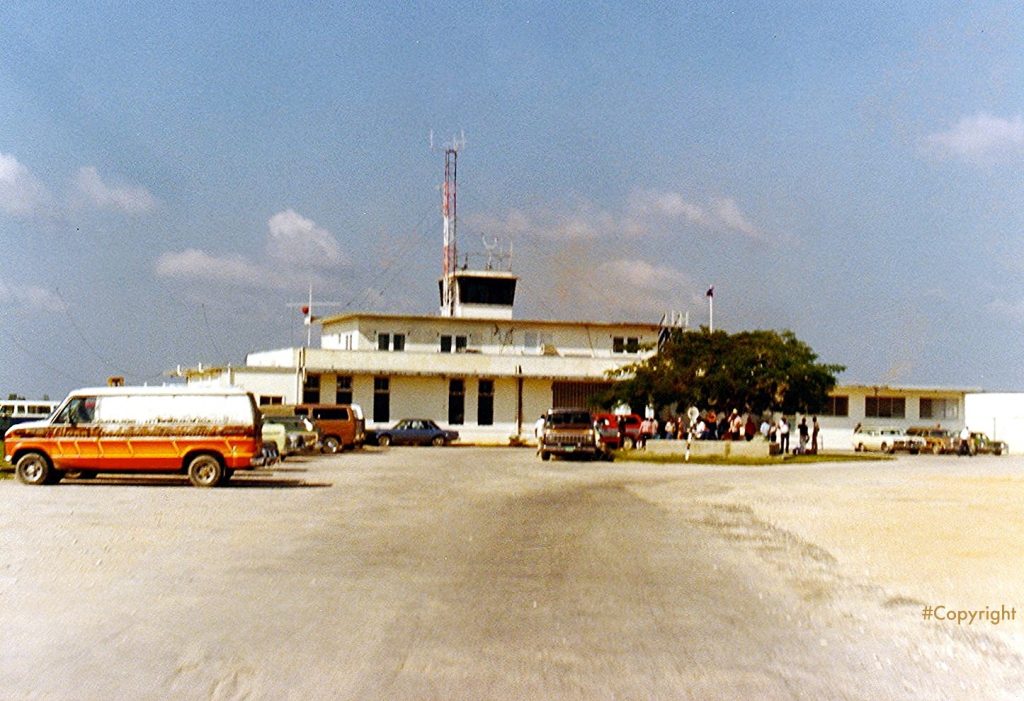
It is October 10, 1984, and I have arrived at the Belize airport, which from the air looked like it was carved out of the jungle. Exiting the plane, I could see that all around the airport were numerous British soldiers and military equipment. This airport seemed more like an army base. On the air approach to the airport, the pilot was flying like a fighter pilot making an air strike. I was flying TACA Airlines, and the plane stopped in Belize on its way to El Salvador. The lady sitting next to me had a baby, and it cried for about two hours all the way to the country. On the way to the terminal, George Price, the Prime Minister, was greeting all the passengers from my plane. It was interesting because the main reason I came to Belize was to observe the first democratic election in the country. I had studied his government before I left the US, and it was exciting to meet him in person.
The cab ride from the airport cost me ten US dollars, and I think the driver overcharged me. The exchange rate is two and a half Belize dollars, so the cab ride was 30 Belize dollars. On the way from the airport, the country was very open and underpopulated. There were some bar-like joints on the way to the city, and I could tell that they were drinking holes. Women were standing out in front of the joints, and I could tell they were prostitutes. The cab driver asked me a few times if I wanted to stop at one of them and get a drink. When we arrived in the city, the first hotel the driver took me to looked like a party hotel, like the joints along the road from the airport. I asked the driver to take me to another hotel.
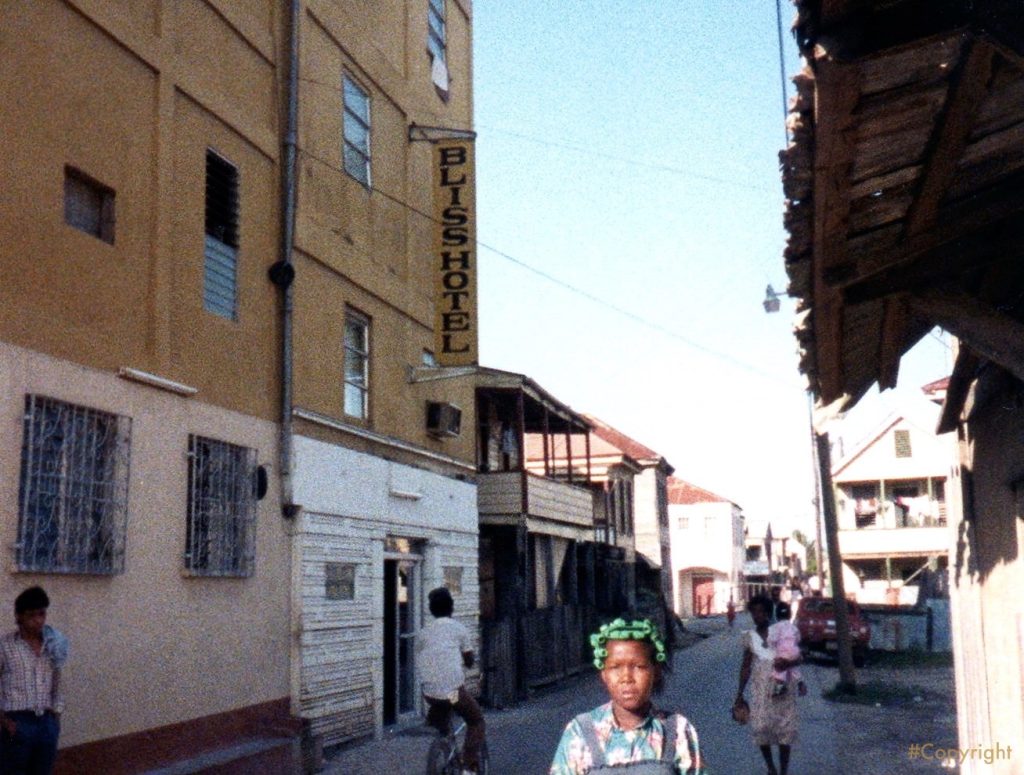
The cab driver took me to the Hotel Bliss. The owner of the hotel and the cab driver knew each other, and it seemed like they had some deal. The hotel was not bad and the owner, named Ramon, and his family live on the first floor. The room cost 15 dollars US, and the rooms seem to be safe because there was a check-in desk you had to pass to get to the rooms. Additionally, Ramon had a room that he offered to rent to me for $ 150 per month. I walked around the area of the hotel, which was in the heart of the city. You could see the US influence everywhere, like cars. On the TV, you received American programs primarily. Also, the majority of the people looked like Black Americans, and no one looked at me like I was a tourist.
The city would be considered underdeveloped by US standards, and I noticed a lot of young girls coming from school, and it seemed that it was more women than men that I saw. I went by the central harbor close to the hotel. I decided to take a boat out to one of the small islands near the capital. The owner of the hotel told me about the islands that they call a Caye.
Day 2
October 11, 1984, was my second day, and I got up early to get a start. I went by the US consulate to register so other people knew where I was, and stopped by a store to buy some postcards to send home. I went with Ramon to take his grandchild to school. The school was a Catholic school and was next to the US Embassy. He said it was one of the best schools in Central America and that children from all countries come to Belize to put their children there. Later in the morning, I went with Ramon to take his daughter to her job, where she works as a special education teacher. On the way back to the hotel, we passed a place called Studio 21, and he told me that it was a house of prostitution. He said that most of the women there were from El Salvador, and they are young, and it’s where all the British soldiers spend their time.
I was sitting in the lobby of the hotel when a good-looking woman came to see a man called Mr. Edwards. On the first day, I was in the lobby and overheard Mr. Edwards on the public phone talking to someone, mentioning that he was going to see the Prime Minister when he returned to the country. Around lunchtime, I went to the Chinese restaurant next door to the hotel to have a few beers. When I was sitting there, Mr. Edwards came into the restaurant. He talked to the owner of the place, and then he came over to my table. We talked, and he told me that he was a real estate developer and that he was one of the most prominent investors in the country. He said he was a longtime friend of Ramon and that he lives in Miami and comes to the country every month to look over his business. He said that he was born in Belize and has lived in Miami for seven years. He said that he has all kinds of business investments, fish farming, orange juice, hotels, land, and that he owns six miles of ocean front property near the airport. He said he will be in the country for about a week and that he would take me to see the countryside. I had a feeling about Mr. Edwards, and my observation warning lights went off. He seemed to be an agent type, and I didn’t know what agency he was part of.
In the evening, I walked around town and saw most of the major hotels, and I went by one of the banks to cash some traveler’s checks. That night, Mr. Edwards and I watched on TV the US debate between Ronald Reagan and Geraldine Ferraro that was beamed by satellite from Chicago, but all the commercials were Belizean-owned. Most people in the country were for Reagan, but I had only talked to two people. The people in the country were for the CBI and Reagan’s stand on communism in Central America. I think he makes the people seem safe. With the first-ever democratic elections getting ready to take place, you could tell no one really knew what direction Belize was going to take. Tomorrow is Columbus Day, a national holiday.
Day 3
October 12, 1984, was a slow day because of the holiday. I decided to go for a walk and sat on a small beach. On the way back, I stopped off at the Fort George Hotel to have lunch and a few drinks. The hotel was very upscale and luxurious. In the evening, the husband of Ramon’s daughter came by and we talked about the US, politics, black Americans, and the general life in the US. He was programmed with the misinformation that people who live in countries like Belize had not been to the US. Tomorrow I plan to take a boat out to the island called Caye Caulker.
Day 4
On October 13, 1984, I got up early to catch the boat to Caye Caulker, and while having coffee with Ramon and Mr. Edwards, I learned that Ramon was a former policeman. I had wondered why Ramon was so well known and respected by all the people around town. He took me over to Mom’s restaurant to arrange for a boat to take me out to the island. While at the bank to cash some checks, I met a man called Chocolette, a boat owner who would take me out to the island. He was a white man from Canada who moved to the country. He had a two-engine high-speed boat, and everyone in the harbor knew him. While waiting for the boat to leave, there was another boat owner from Granada who was talking shit to Chocolette, talking about how people really didn’t need him. He said that when he went home to Canada on vacation, nobody asked about him. Then a busload of British soldiers arrived, and the man from Granada loaded up the few who were on my boat.
I met a man on our boat who was from Columbus, Ohio, who was going to the island because he was part of a company that was building a tent hotel on the island. CBI was the name of the company, and he said that they had an operation in Cancun. When the British soldiers were getting on the other boat, he said “oho,” which means they got the animals. He did not know that the young white man sitting next to him was a soldier out of uniform. The soldier remarked, “No offense taken, I know how it is to be on leave”.
When we left the harbor, it started to rain, and all eight of us got soaking wet for the first half hour of the trip. We broke out of the storm and passed some small uninhabited islands that were swampy-looking. When we reached Caye Caulker, it was an unbelievable tropical island that looked about two or three miles long. When I checked into the hotel, the man from Columbus was also staying there. The restaurant at the hotel had a special to eat that afternoon, fried lobster, which I instantly fell in love with. While at the restaurant, I saw a none white girl who was staying at the hotel who looked like she was a prostitute. I could have been wrong, but it was her look, and a man that I know was on the hunt was with her. There were a lot of British soldiers at the bar, and I felt it was going to get rowdy that night, so I decided to stay away from the bar.
The room at the hotel cost $ 13 Belize dollars a night, and the lobster dinner was $7, so all this came to about $20 US a night for room and a meal. After lunch, I went for a walk on the island, taking in the other hotels and rooming houses around the small village. When I was sitting on the dock watching the ocean, a “Rasta brother” came up and started talking to another brother on a boat that was leaving the dock. The Rasta man started saying, “Rasta man only need salt water to be clean, Rasta man say the inside must be clean, man must clean himself inside or have ill feelings and be clean”. Then he jumped into the water to take a swim, and I said, “Why not’ and jumped into the water to take a swim. Some other middle-aged people were swimming. There was the man, named West, whom I met on the boat over to the island with some other white people, looking at us. I swam for a while and then went back to my room.
That night, I went back to the restaurant to have dinner, and the fried lobster was bigger than the plate I had at lunch. It was about as big as a significant stake at Bonanza. This lobster would make anything at Red Lobster back in the US look like McDonald’s. The cost of the day’s trip, including the boat ticket, room for one night, two fried lobster meals, beer, rum drinks, and the boat trip back to the harbor, came to about $ 31. After dinner, I went back to the dock and watched the sunset, and then went back to the room for a while and just lay around. Later in the night, I went back to the bar for a few drinks, and there were a lot of loud tourists and British soldiers there, so I decided to go to my room and get some sleep.
Day 5
October 14, 1984, was the day after my first stay on Caye Caulker, and I decided to walk around the island at sunrise and take some pictures. The trip back to Belize City was excellent; the boat went a different route, cutting through a few little islands. When I arrived back at my hotel, I spent some time writing some letters and then later took a walk back to the Fort George hotel. I was having a few beers and a meal and there was a table next to me some white people that was part of high school exchange from the US at the table next to me. They started talking to me as if I were from Belize; the conversation was one-sided, focusing on the great US. I just listened to what they had to say, playing along, when I told them where I was from, they were physically shocked. They were white, and I was a man of color, so he must have been from Belize, not the US.
On the walk back to the hotel, I helped a man in a truck push the truck to get it started after it had a clutch pop. The man gave me a gift of oranges for my help, since they were in the city selling oranges as their business. Back at the hotel, I spent some time talking about my trip to Ramon and finished writing some letters. Ramon told me that a man from the bank came to the hotel looking for me because he had heard that I was in the country conducting research. The man told Ramon that he wanted to give me some promotional information. This incident taught me quickly that news travels fast, even in the capital city of Belize. It was rare for a Black American to be in town.
Day 6
It was a good day, and I got up ready for travel to Belmopan, the capital of Belize. I had planned to travel by bus, but while I was sitting in the hotel lobby, Mr. Edwards arrived and offered to take me with him. The trip was fine, like traveling the back roads of Virginia. On the way, we passed the road to the Village of Peace, a refugee camp comprised of El Salvadorans, Guatemalans, and Belizeans. Mr. Edwards said he owns about 30 acres of land at the crossroads of the village, about three miles from the main road across the Belize River. Said he owns other pieces of land along the main road to the capital. Mr. Edwards left me at the marketplace because he had to go to a meeting.
The capital is very clean and neat, which was a significant change from Belize City. The population is about 4,000. The capital reminds me of a large college campus and is designed like a park, with ample space for future development. I walked around, and I could tell people knew I was new in the city. I would rather stay here than in Belize City.
After walking around, I just sat at the market near the bus stop and watched the people. There were people from diverse backgrounds. In the area where cattle ranching is practiced, I saw many along the road on the way to the capital. There were many men riding horses to round up the cattle. I saw people taking the bus traveling to and from Guatemala, such as a family of native Guatemalan Mayan Indians. It was something about the way these people lived, but I don’t know how to put it into words.
I spoke to the hotel owner, who is a friend of Ramon’s. The hotel, Circle A, is charming and is run by a black man who was a former policeman, having worked with Ramon. There is a restaurant and bar next door, which is owned and operated by Mexicans. The average meal costs 10bz, and they rent rooms for up to 60bz. We talked, and he is going to introduce me to a man in charge of the Ministry of Lands. I want to secure some land, and it is rumored that land prices will soon increase. The average cost of land is approximately $ 30 per acre.
The trip to Belmopan with Mr. Edwards was interesting, and I could tell he was sizing me up; I was sizing him up as well. I realized from talking to him that he is a speculator and is politically tied to the establishment of the country. He is a person to watch with some scrutiny, and he is an agent for someone or something.
Day 7
I was up early this morning to get some work done. I had breakfast at an excellent hotel. At the table were other people and two locals who were participating in a teacher training program. The lady at the table was from Canada and was here working on some agricultural project. The other man at the table was from, of all places, Alexandra, Virginia. We discussed Washington, and I believe he is married to a local woman. He is here working on a Coco project. He provided me with some valuable information on finding a house in the area.
After breakfast, I started walking around looking for a house. I went to the Electric Board, which is responsible for houses, because they turn the power on and off in the city. I was recommended to several houses. I saw one for $150 US, and it was a three-bedroom unit with all conveniences, except it was unfurnished. I looked at other smaller houses and liked them. It features two bedrooms, a combined kitchen and living room, and a small bathroom. The people who own the house live in Belize City. When I return tomorrow, I will look them up. The big house, which is rented for $ 150 US, is owned by a man who works at the satellite communication station. Two people in front of me want the house.
While I was walking around, I stopped by the Appropriate Technology Cooperation and spoke with the lady there. It is a program that is available nationwide. I’ll be in touch with them later. I went to the Ministry of Lands and spoke with Mr. Neal. He provided me with some information on buying land and will assist me with land when the time comes. The more I walked around and talked to people, the more I found out that they knew me before I knew them. News travels when new people arrive, primarily when they act and look like me.
When I returned to the hotel, I spoke with the owner for a while. I had been noticing people going down a dirt road in front of the hotel. The owner told me it was a refugee camp down the road, about two square miles in size, where Salvadorans are settling. He said that they had been in the area, clearing a lot of the jungle and starting a farm. He said the government had just started asking them to register.
I had to see for myself, so I took a walk to the village. When I was walking down the road, I saw houses that I would see on TV at home, in villages in El Salvador. People washing clothes in the creek, little houses, etc. It’s something about the human condition and what people do to others and what they have to do for themselves. I walked about a mile and watched the children coming from school. It’s interesting to watch a 5-year-old child coming from school walking through the jungle to get an education. Students at home don’t know what they have and how other people really want what they abuse.
I don’t know if I went all the way to the village, because after a while of walking, I started to get paranoid. When I first saw people, they looked surprised, and the children passed me as I walked down the road. I arrived at another area where stick houses were made, and there were no people there, unlike back up the road. I got a feeling that something was wrong, so I decided to go back up the road to the hotel. When I walked, a man emerged from the jungle and followed me on the other side of the road, keeping his distance. When I reached the end of the road where the hotel was, he disappeared.
On the way back to the hotel, I stopped off at the Frog Bar, which was the restaurant next to the hotel. There, I met another Canadian who was a citrus grower, specializing in orange juice. He owns approximately 50 acres, and we discussed the possibility of growing oranges and the potential revenue they could generate. While we were talking, an American from Miami came in who knew the man, and he spoke, took a seat. The man I was talking to stopped the conversation, so I turned my back and started talking to the other man. It was another “little you big him” type conversation. These other people are the same everywhere. He was talking to a contractor who had a son working there; I think his son owned the company. He discussed how he had to visit the job site and speak with the workers about their work arrangements. They were taking too much time for lunch, and starting to work precisely on time. The typical white boss mentality I experienced at home. They are all the same. I left because I did not want to hear that shit. The master-slave mentality was going full force.
I met a teacher from Jamaica that evening. We sat and talked about his country and the US. He received his PhD from the University of Wisconsin and studied at Stanford and other colleges in the US. We had dinner and talked. At that time, I did not particularly like the restaurant. It is run by either Mexicans or Salvadorians. I can see the racial differences between the people and also the way they are treated. There is racism here. It is more under the surface. But it is underground all over the world.
There is something I want to mention at this point in the trip. There is more skepticism among people here than at home, where they tend to discuss themselves and their beliefs more openly. Here, you see and hear the caution of people as a form of protection. I must remember to keep my mouth closed and take care of myself. Ideologies and similar concepts can be trouble in the long run. If I am to spend more time here, I need to decide what kind of path I’ll take. I don’t need to jump around and things like that. One thing is striking: no one really asks for your name or gives theirs, especially during the first meeting. People don’t exchange names after a complete acceptance of you, or they have heard about you through other people.
Day 8
I went out this morning to follow up on a place to stay. I went back to the Electric Board and spoke with the people who were renting the house I had looked at. They said they will be in touch with me. I talked to the hotel owner for a while and settled my account. I went over to the Appropriate Technology Center, which a local man and a Peace Corps volunteer from Montana ran. I’m glad I did not enter the Peace Corps. I spoke with the communicator about education, and he said that he was an honest man and someone with whom to do business. Most of the information about this country is misleading. You read of one thing and see another.
Everybody is scared of the boogieman. The CIA, they say, is everywhere. How many people think I am one of them? When I talk to people, they discourage me from doing business. Then they turn around and say you can make a lot of money. As I think about it, it seems better to think for yourself and avoid getting involved in big business, instead sticking to buying just a few good things for Christmas. The rich are too great. I may write a photography essay, conduct some research on the slave trade, and then go home. I’m beginning to believe that the whole international business hit is just that. It’s too controlled by both sides of the government. Every day, people are left out. I need to go away and see the real Belize people.
I started to get discouraged about the theoretical aspects of what I had learned about international business. The commoner with little money to invest would be discouraged from business as a whole. The CIA scene was real, and everybody seemed to be aware of this. It may have been just a cultural situation. In Sri Lanka, I did not encounter this type of situation, but I was not attempting to do what I am here for.
Day 9
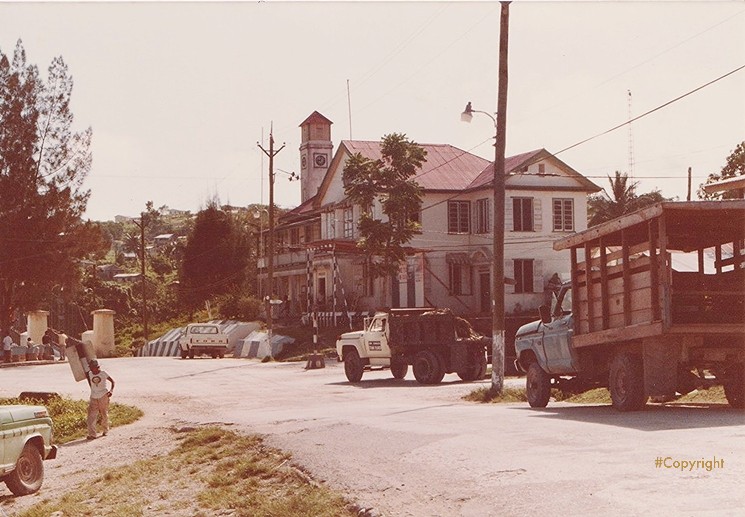
It’s only been nine days, but it seems longer. I was up early to get ready for travel to San Ignacio. I washed some clothes, then mailed some letters, and went looking around for some business. I saw the black coral that they talk about so much. It averages around 30bz for a lovely necklace, and other items are less. These will be good buys for Xmas. I also went to the lumber yard to see how much mahogany costs. You can buy it for $1.50 per foot and get 2 3/4 in planks out of it, a good buy. Most get some to send home and make furniture. I walked to the station and caught a bus from Belmopan, then to San Ignacio. The city is lovely, looks just like a mountain town. The Belize River flows below the city and the hotel. I must take some pictures of the place. Most people speak Spanish, particularly many from Guatemala, and the country is about an hour away. I want to travel there, but I’m not sure. Had a few drinks at the hotel, which was very expensive. Almost everywhere I go, it’s better to buy a bottle of beer.
I went around the town looking for a place to stay. I checked out a nice-looking guest house. I went to the man at the desk or room and asked if he had anything available, and he told me yes. He told me to walk around the rooms, which were open to a large walk-around porch. When I walked and looked in each room, I would see a woman in the room. I went back to the man at the desk and told him that I had not seen any empty rooms and that there was a woman in each one. He told me that the woman comes with the room. I decided to move on and find another place to live. This was a Central American house of prostitution.
I walked around and found another hotel. The hotel features a swimming pool, patios, a basketball court, and a range of other amenities. It even had a dance floor. I still need to find a place to stay. It’s too expensive. While at dinner, I heard a man talking and thought he was one of those other people; I turned around, and he was an Asian from the US. He looked around for someone to sit with, and of course, he went to the first white person he saw. Even Orientals don’t identify with anything but light skin. When I get back, I’m going to write a book that will make history.
Day 10
I got up early this morning to do some laundry. After breakfast, I went for a walk, taking some pictures of the town, and then returned to the hotel. Around 10:00, I talked to the young girl at the desk. I told her I was here to look for some mahogany products. She told me that there was a saw mill up the road from the hotel. I went for a walk up there, and it was located next to the Belize Defense Force post, about a quarter of a mile away.
It was run by a British man who made furniture and sold it for export. The New Hope Trading Company. Caesar Sherrard, P.O. Box 48, San Ignacio, Belize, Tel. 092-2188, VHF 756). His operation was a small but very interesting one. He has a solar kiln and a group of people who make his furniture. We discussed, and he provided me with some prices for shipping Mahogany to the US. It averages out to about 1.50 per foot shipped to Miami. I can secure a container load for approximately $12,000. It’s a reasonable price. He also manufactures some good chairs that can be purchased for roughly $19, shipped to Belize for export with the necessary paperwork. He also had some good carvings in Mahogany.
When I returned to the hotel, the girl told me that a relative of the hotel is married to a relative of a large mill that I had seen was visiting. Tomorrow I’m going to speak to the owner of the hotel about the mill. I’m also going to hire the girl to do some research and paperwork for me on the Mahogany so I can cut some corners and get some work done. She’s very lovely and good-looking. Rick James said 17 and sexy. In the evening, I walked to the town to see if I could get to a farm guest house up in the mountains. I spoke with a policeman, and he told me that I could take a cab or a bus there. I don’t know; I may go or I may go back to Belize City and return to the Cay, spending a few weeks.
At lunch, I talked to the oriental that I saw last night. He is here on an Agency for International Development project with another of those people. They are doing a market survey of daily production. They are traveling all over the country to do the study. I also met a lady from New York who is here in the Peace Corps. She is retired and works in a teacher program.
After dinner, I was sitting around when the British soldiers and women came in, along with them. They upset me when I saw them with black girls using them as usual. I saw the same out in the Cay. The experience with the soldiers was an eye-opener. It seems that they were in the country to help protect the border between Belize and Guatemala. They felt that they could do as they pleased. The girls that they were with did not look happy; they looked like they were enslaved.
I have realized an essential thing here. What is needed is a Black diplomatic corps. I want to train Blacks who travel to countries and show the other side. I’m tired of seeing the scum of the earth in these different people using and spreading their tricknology all over the world. I must seek this when I return.
Day 11
Today was a very enlightening day. I was up early as usual to get a good start on the day. I had breakfast and then went to town to cash some checks to pay the hotel. I spoke with Elite, the young girl at the desk. She had been invaluable, so I wrote her a little note and gave her a tip. The attention I gave her was too much for the other workers there. There was some skepticism among the other people. I’m not sure if it was jealousy or a form of protection. She was very nice, but later you could see she had changed. I decided not to make contact with her again. Something was happening that I was unsure of.
The experience at the hotel with the Elite was an experience. She was not black but a mixture of local Indians and Spanish. She was talked to by someone of importance at the hotel. She was very nice, but later you could see she had changed. I decided not to make contact with her again. Something was happening that I was unsure of. The experience with the soldiers was an eye-opener. They were in the country to help protect the border between Belize and Guatemala. They felt that they could do as they pleased with whom they pleased. The girls that they were with did not look happy; they looked like they were enslaved.
Day 12
I left around 1:00 and took the bus back to Belize City. When I was sitting on the bus, I really noticed the multi-racial mix of the people in the country. There are all kinds of people here, a diverse mix of races and colors. When I was sitting on the bus, I could see the abundance of divisions among the people in the country. People who think the US would be simple are often those who hold status here. There were the bus driver, the man who collects the money on the bus, and the people who work at the hotel, among others. At home, these people are looked down on; here, they hold status. It must be the great divide between those with money and jobs and those who don’t. Even simple store clerks have a high status.
When I was sitting on the bus, I could see what the man at Circle A told me about politics. I have begun to see the different color shirts. They are made the same, but one party wears white and the other light blue. I was on the bus, and a man got on; I knew he was a man of influence. He sat beside me. Another man that I had seen in Belmopan got on the bus. You could tell he was a man of influence; he wore white. They did not speak to each other. You could see the political differences. Talking to the people, all say the government is corrupt. These are the everyday people, as I look, they do not wear those kinds of shirts. I have decided to stay away from the government and those closely associated with it. That includes Mr. Edwards. My first impression of him was correct.
Traveling through the countryside, I could see the mentality of the people in change. They want simple things. The people in charge claim they do things for the people, but that’s not true. I’ll never forget the look on Edwards’ face when I told him that I was going to take the bus to San Ignacio. It was a look of saying you are traveling with those people. I’m backing down, staying simple things, and with ordinary people. I don’t want the headaches and problems of the so-called big shots.
On the bus ride back to Belize City, I got a nasty cold. When I arrived in the city, I visited all the small pharmacies in search of some medications. All the medicines were from some other country, and they did not work. That night, I had a nasty sore throat and thought I would die. It had to be one of the worst colds I’ve ever had. I had considered visiting the local root doctor in the city center to seek some help. In Belize City, there was one of the largest collections of roots you could ever see, but I was scared to try anything.
I spoke with Ramon, and he suggested that I leave Belize City and return to the Cay, where I would feel better. I went to Fort George Hotel to have some dinner. When I was sitting there, a couple of four came and sat down at the following table. Thought I would have some fun. I asked which part of the states they were from, and after they told me, one lady asked me if I had ever been to the states. When I told her I was from Virginia, she was shocked—another example of a supremacy complex. Tomorrow I think I’ll go back to the island, “cool out” for a while. Collect my thoughts and do some writing.
Day 13
I got up early this morning to prepare for my return to Cay Caulker, but then I found out that Chocolate had not arrived today. I spent the rest of the day walking around town and stopped by Fort George to have a beer. I returned to the hotel and watched the US presidential debate on TV between Reagan and Mondale. It is amusing to see Belizeans watching the US election programs. The cold had me down most of the day, and I was up all night with a running nose.